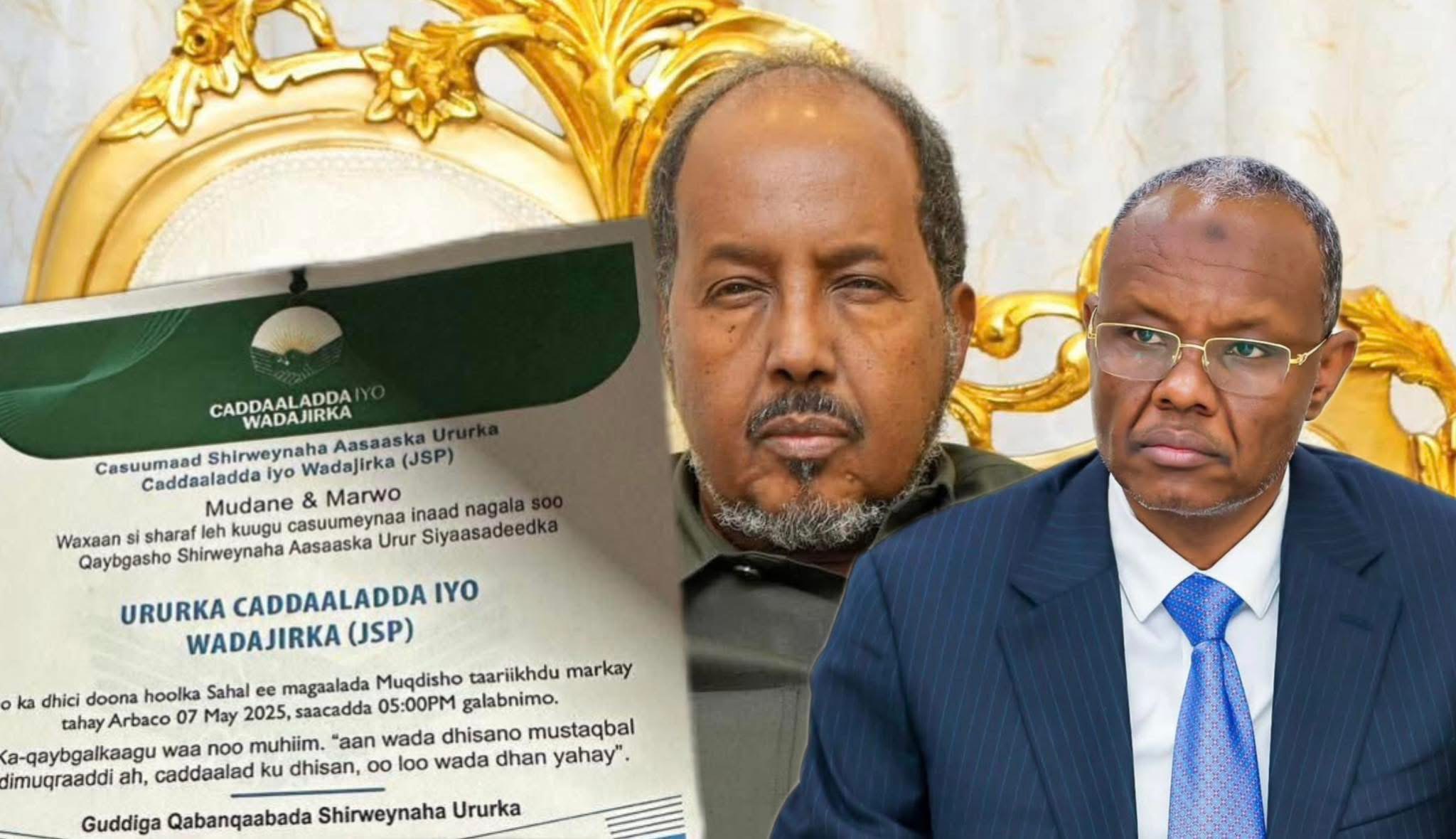
The official announcement ceremony for a new political party, reportedly led by Somali President Hassan Sheikh Mohamud, has been postponed following a serious disagreement over the distribution of key leadership roles. Sources confirm that South West State President Abdiaziz Laftagareen has firmly opposed the launch unless the party’s leadership is shared along clan-based lines.
South West’s Demand: “Share the party leadership between two clans”
President Laftagareen has demanded that if the new political coalition is to include the federal government and the pro-Villa Somalia federal member states, then its leadership must be distributed as follows:
• Party Presidential Candidate: Hassan Sheikh Mohamud (from the Hawiye clan)
• Party Chairman: A representative from South West State (Digil & Mirifle clan)
• Party Secretary-General: A member from either the Daarood or Hawiye clans
The South West administration argues that, based on Somalia’s well-known 4.5 clan power-sharing formula, it is unacceptable for the two clans currently represented in the National Consultative Council — Hawiye and Digil & Mirifle — to be sidelined. Laftagareen insists the new party must reflect that balance.
President Hassan Sheikh’s Position and Odowaa’s Future
According to insider reports, President Hassan Sheikh is open to modifying the party’s leadership structure if tensions escalate. There are indications that current plans may include removing MP Abdirahman Odowaa from the position of party secretary-general to appease the South West delegation, potentially offering them that role or that of deputy chairman.
Tensions in Baydhabo: Ceremony Cancelled
The official ceremony that was expected to announce the new party was cancelled at the last minute, amid reports that President Laftagareen was preparing to return to Baidoa the same day — an apparent sign of his dissatisfaction and lack of trust in the process.
Laftagareen’s argument is rooted in the clan power-sharing formula. According to him, only two of the four major clans are currently represented in the Council — the Hawiye and the Digil & Mirifle — and therefore, leadership roles in the new party must be divided between them accordingly.
Conclusion
The internal political wrangling over the structure of the new party has delayed what was expected to be a significant step in Somalia’s political landscape. The central dispute — power-sharing among clans — highlights the persistent influence of clan dynamics in Somali politics. All eyes now remain on how President Hassan Sheikh and his allies will resolve the impasse and whether the new party will move forward with broad support or fragment under pressure.
About The Author
